

It's worse than I thought: thousands of protected acres GONE for a "solar" factory
I attended a proposed solar farm hearing in the town over from mine last evening. What I witnessed was worse than I imagined: they're prepared to develop over one of the LAST grasslands in New York.

I jumped into my Jeep with my mother and best friend in tow two days ago, headed for a solar “farms” hearing in the county over from mine.
The proposed site sits in the town of Ft. Edward, another one of those historic areas that’s common in Upstate New York. Ft. Edward has been heavily farmed since the founding of this country, with many of the families there still working the farms their great grandparents founded in the 19th century.
It’s a very rural area with breathtaking views of the Adirondack Mountains in the background. One could definitely say there are more cows, horses, and chickens in Ft. Edward than people. And it’s one of those quiet, peaceful agrarian towns that are becoming rare in our increasingly developed country.
Ft. Edward also happens to be one of New York State’s favorite “ground zeroes” for solar experiments. For a town so small, there are multiple solar projects in the works or almost at the completion stage.
This solar project in particular caught my attention. Why? The sheer size of it.
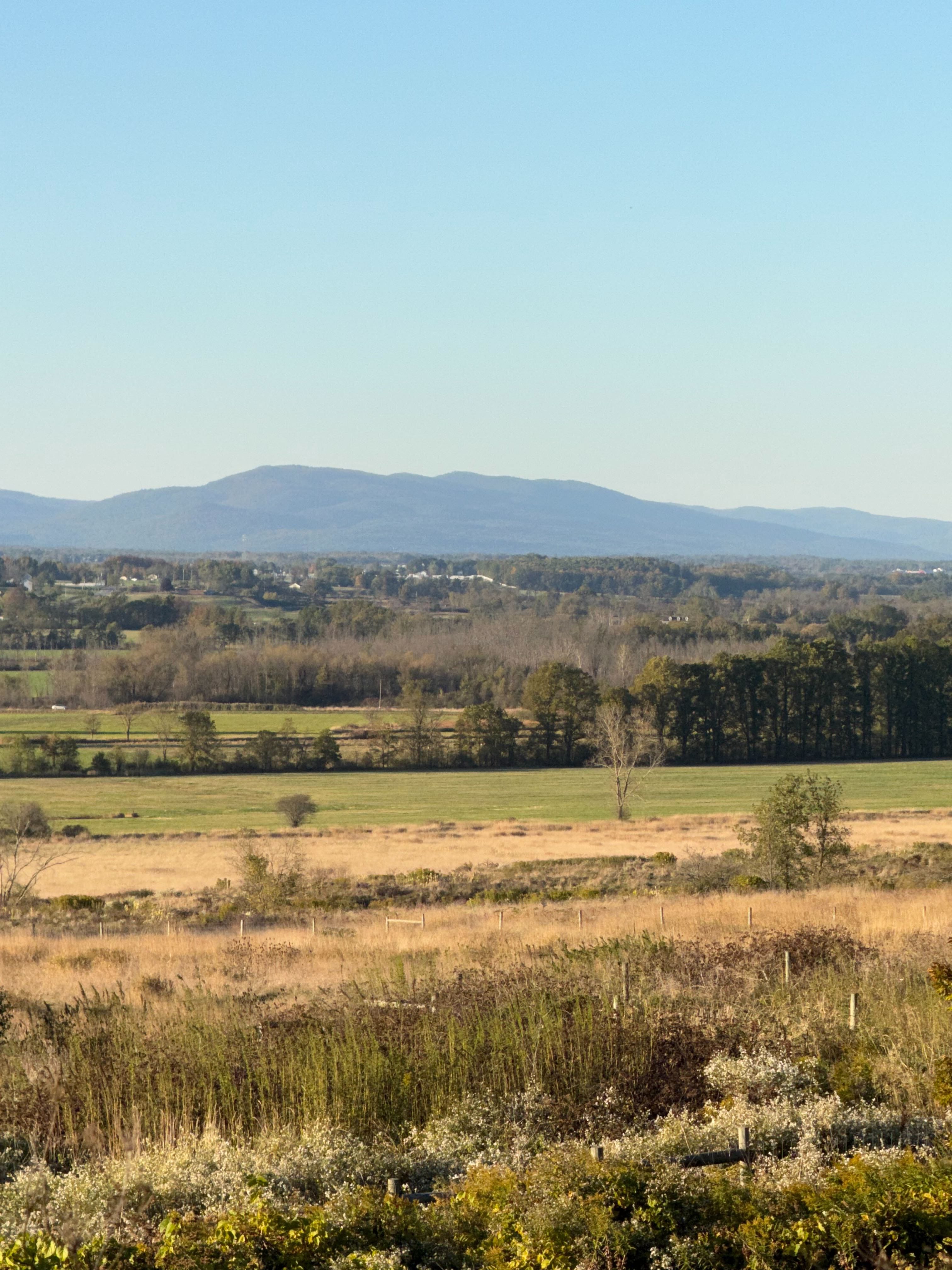
The state, backed by a corporation out of Canada, Boralex, submitted a proposal for a 750-acre solar farm smack dab in the middle of the farming district of this town. As I learned in the meeting, for a solar farm of that size, the permit holder requests an equal amount of land to house the transformers, wires, roads, and fencing to come in and out of their solar factory. Therefore, the proposed amount of land to be developed and destroyed comes close to 1,500 acres.
And yes, that beautiful land you see in the photo above is that very acreage.
We all arrived at the Durkeetown Baptist Church, where the meeting was to be held, 20-minutes ahead of time. I noticed a New York State Public Services vehicle parked front and center telling me plenty of bureaucrats would be present at this meeting. I also noticed a handful of cars in the parking lot already that had out of state license plates. I saw Connecticut, Virginia, Pennsylvania, and Vermont all present.
“What would people from those states be doing in Ft. Edward?” I said to my mom.
We all looked at each other, knowing full well we were about to step into something that’s much bigger than this sleepy Upstate New York town.
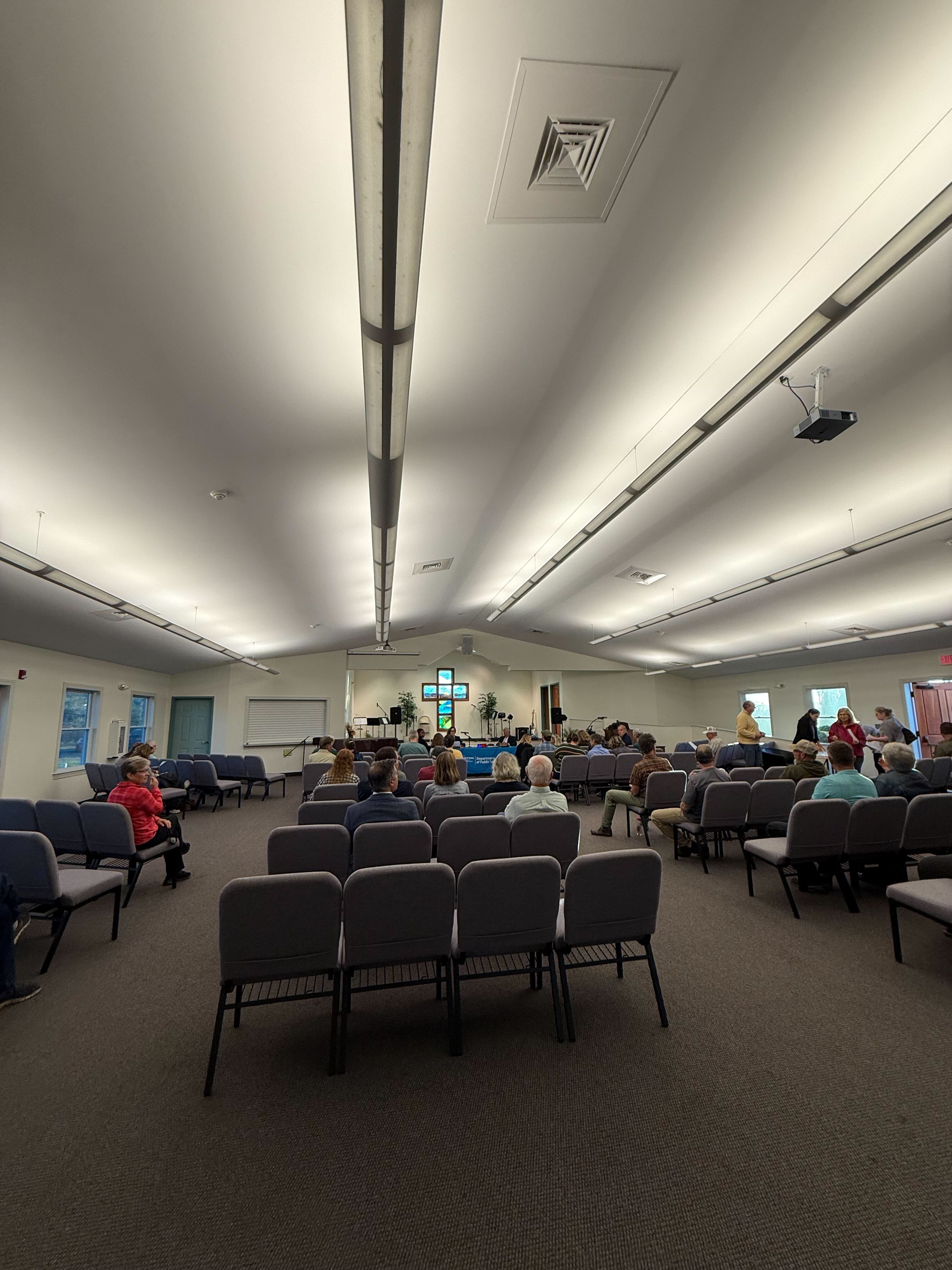
I walked into the church to see a handful of people already seated. With close to 20-minutes until the hearing began, I knew it was going to get full. By the time the hearing begun, every single seat was filled, with those standing in the back as well.
Two New York State judges sat at the New York State Public Services table as the meeting mediators and recorders.
Boralex was not present. I figured. Corporations shield themselves from the emotion, plight, and plea of everyday people, accepting their checks behind closed doors. In this case, those checks are coming from the state of New York and Governor Kathy Hochul.
The meeting began with multiple members of the Washington County Grassland Bird Trust stating the case for the critical habitat upon which Boralex proposes establishing this solar farm. The 1,500 acres includes one of the last remaining grassland habitats in New York State for several endangered, threatened, and rapidly declining grassland bird species, including the State Endangered Short-eared Owl and Northern Harrier.
Not only that, this land is home to other at-risk species found there like the Upland Sandpiper, Horned Lark, Eastern Meadowlark, and American Kestrel.
And it wasn’t just any ole person taking the stand to make the case for these animals and habitats. There were ornithologists, PhDs, scientists, and Cornell graduates begging Boralex to reconsider the location of these panels. As each scientists explained, the solar farm would be catastrophic for so many species, triggering an ecological collapse that would ripple far and wide from little Ft. Edward.
One of the speakers said something I will never forget:
“You have some of the best and brightest minds in the world of grassland habitat conservation and ornithology. And not one of us has been invited to take a seat at the table with New York State, the DEC (Department of Environmental Conservation), and Boralex.”
Another speaker shared something that shocked me, though I can’t say surprised me:
“Back in 2018 when the start of this project was submitted to the town, us here at the Grassland Trust showed Boralex where the most critical parts of grassland AND wetland habitat reside on this massive plot of land. We outlined the specific areas that must remain intact, or else trigger widespread ecological collapse. When Boralex submitted for their permit a few weeks later, we saw they proposed placing the panels on top of the very fragile ecosystem areas we had outlined for them.”
I was starting to see the dark side of ‘play pretend’ environmentalism that New York State is so good at. The DEC is praised far and wide for preserving habitat in our state. Yet, I learned that night that some of the land being sold to Boralex is DEC-protected habitat. They had designated the grassland a DEC-protected, rare habitat… but suddenly turned a blind eye when a solar company out of Quebec came to town to set up a solar factory.
It’s a story that’s all too common. State-sponsored ‘environmentalism’ disappears the moment a state-funded issue deemed to be more important comes along.
In this case, it’s Kathy Hochul’s nearly impossible ‘clean energy targets’ she wants the state to meet by 2030. She stated New York must hit a 70% renewable energy target by 2030, zero emissions by 2040, and 85% greenhouse gas reduction by 2050.
All of that sounds great on paper, right? Especially with an election year coming up.
Except the application of this kind of radical change is destroying the environment faster than monoculture farming.
I am here, at ground zero, watching it unfold. We are trading what’s left of our farmland and critical habitat to make way for renewable energy that barely holds a candle to generating the power nuclear does. Along the way, thousands of species will go extinct. Critical habitat will fragment. Fragmenting something like a grassland ensures all of the endangered and threatened species will move that much closer to extinction. The farmland that’s included in this deal will be forever taken out of commission, leaving even less acreage for the younger generations coming in that will need to grow our food.
When all of the available arable farmland hosts windmills and solar panels, where will the animals go? Where will our food come from? What will happen to the pollinators? What will happen to younger generations? Taking this much land out of arable commission causes the farmland around it to steeply go up in price. It’s pricing out younger farmers that we desperately need to join this battle.
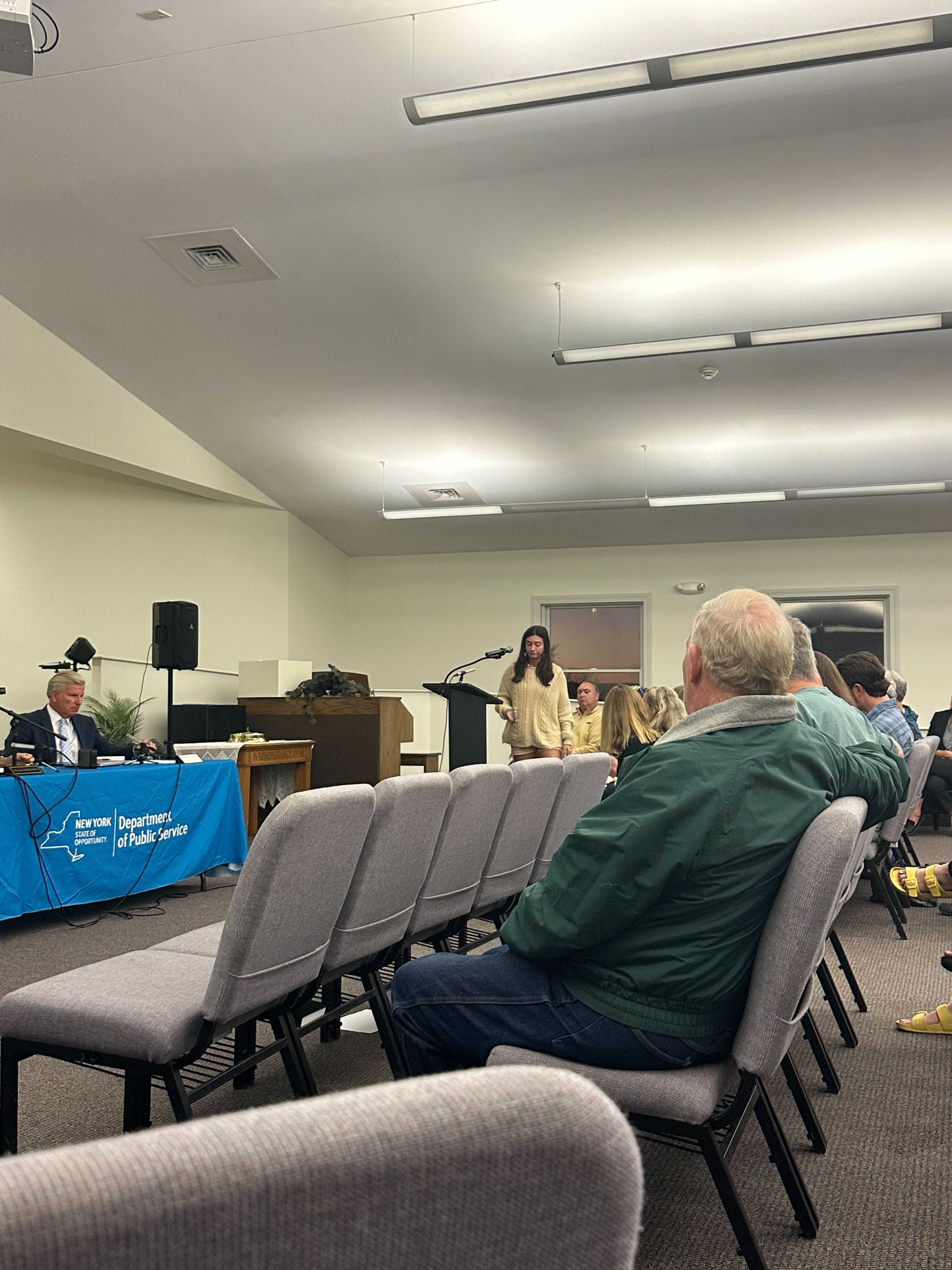
I had not planned to speak at this meeting. But by the end of it, I couldn’t keep it in any longer. The meeting was just about to conclude, and after all of the heartbreaking pleas I had heard for what this kind of solar factory is going to do to their land, I had to say something.
As a young person and as a young farmer attempting to teach myself how to work the land, I was the only person under the age of 35 to walk up to the podium. I am noting my age because multiple men over the age of 70 who went up to the podium to defend their decision to sell out to the solar factory practically stated “What does it matter to us? We’re old.”
So I walked up there to tell the room I am a 32-year-old new farmer.
“You don’t hear about those a lot do you? What kind of country are you leaving US?” I said.
“I understand that New York State is a very difficult state to live in. The taxes are awful. The government and the governor are awful. But there’s another way to get that quick cash. There are conservation and agricultural easements. The land trusts will pay you in cash for the developmental rights to your land. It ensures your legacy when you die. You get the money you need, and your farm stays a farm. What are your kids and grandkids going to do when you’ve sold every last acre of your farm off to a corporation out of Canada?” I said to them.
I looked these farmers in the face and said it with my whole heart.
“We’re calling them solar ‘farms’ and using greenwashing language to hide what this really is. Boralex is a corporation. In fact, it’s a foreign corporation that you’re letting into the heart of your farmland. What would your ancestors before you say about that? It’s a corporate factory coming in to destroy what’s left of this town. And it’s a corporation in bed with the government of New York State.”
At this point, the judges before me looked horrified. But it had to be said.
“There used to be integrity in this country. People used to do what was right. Now all we have left are the Amish for that kind of integrity,” I also said.
I finished my speech and the room applauded. I didn’t expect such a positive reaction. The meeting adjourned and a line formed to speak to me. I spoke to each and every person, some of them being the aging farmers who maybe, just maybe, may consider an easement for their land instead of allowing a Canadian factory into one of the prettiest valleys in Upstate New York.
I am also connected with the Grassland Trust now and will be finding ways we can work together to save the unbelievably special and gorgeous habitats that make Upstate New York.
With New York State, Kathy Hochul, and DEC in bed with Boralex to meet their green energy bogus targets, I don’t have much faith we will stop this project. It’ll be gut wrenching to watch. But all I can do as one human is impact those I come into contact with. I know my speech made an impact that night. And my hope is this article makes an impact on you. I will speak to any news outlet or newspaper about this.
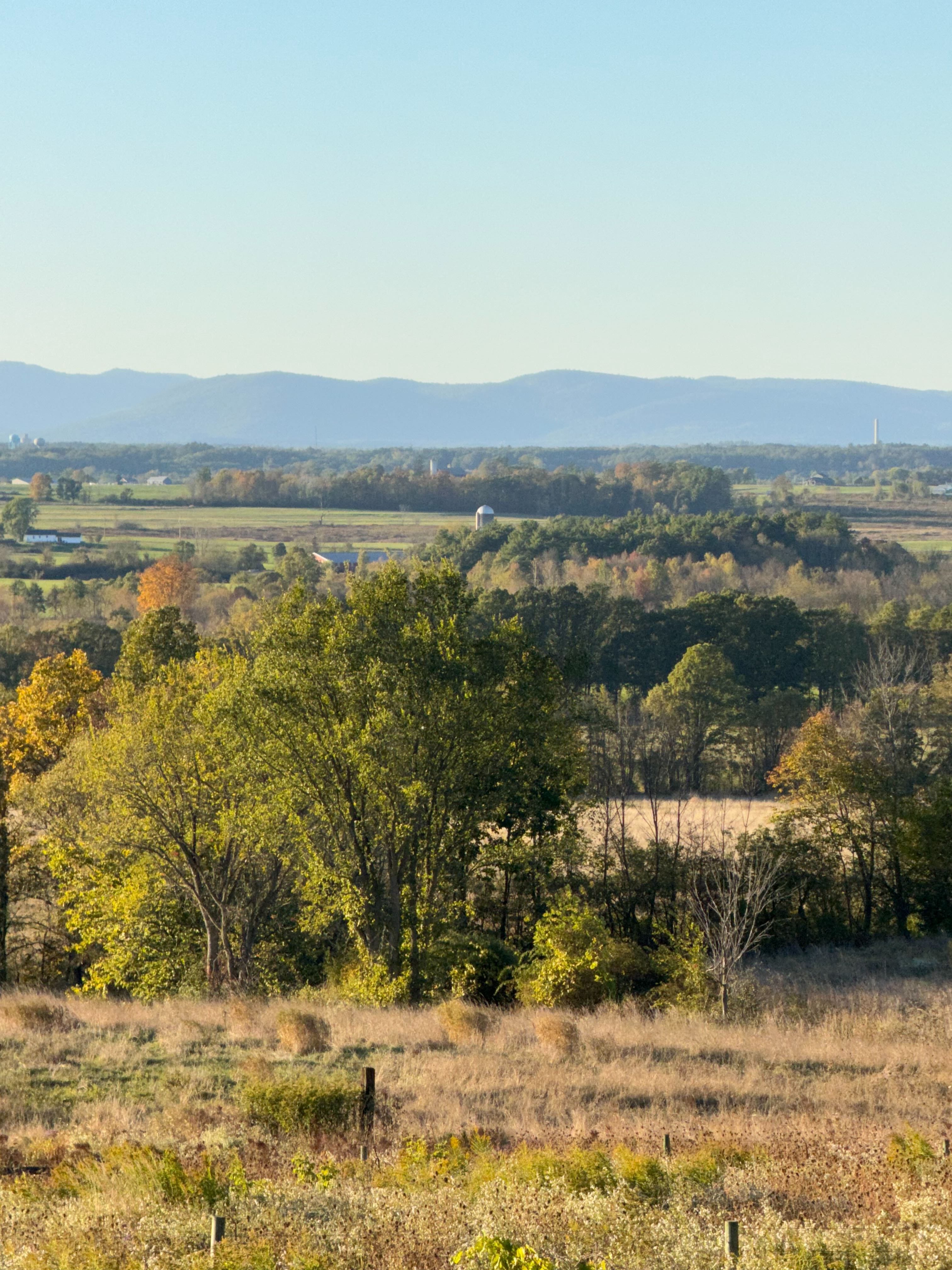
The green energy monster we’ve all created in the name of progress is swallowing up the green environment of our country. It backfired. And it’s going to destroy our rural culture faster than anything else has in this history of this country.
Once this land is gone, we’re not getting it back. Dozens have reported to me the solar companies abandon the panels on their land since it’s very expensive for them to decommission. The panels themselves can’t be recycled. And they only come with a 20-year lifespan. Technology will outpace their current design in 2 to 3 years time, which causes many of these ‘farms’ to go under. Others have reported to me that the promised payments for their land stop after a year or two.
Why? The companies collected their green energy credits and subsidies, happily awaiting them in the office of Kathy Hochul.
I refuse to stand by while this happens. Anyone who calls themselves a conservationist or naturalist should be enraged by this. They are destroying the land we’ve all sworn to protect. It’s up to us to do something about it.
Share this story with someone in your life who may be experiencing the same thing. We do not need to go quietly into that good night. I refuse.
This green hypocrisy is a land grab. Millions of acres of farmland and prairie are being taken out of commission every day right now for this evil.
We must do something.
More to come.