

New York's renewable energy office rushing to rubber-stamp projects before tax credits sunset
The Office of Renewable Energy Siting (ORES) is issuing final permits and construction approvals to projects that have not been cleared by other state agencies before federal tax credits dry up.

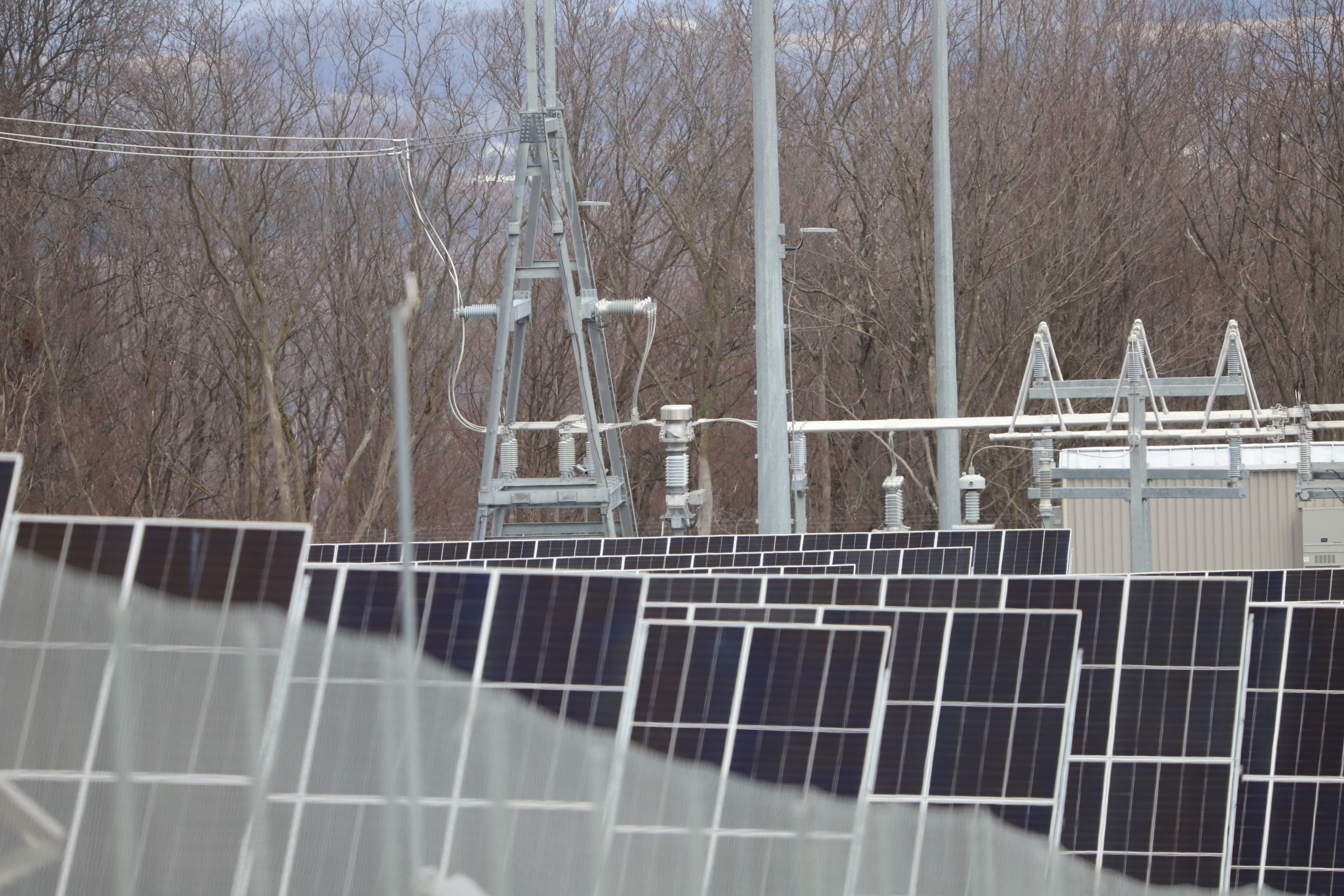
Since the New York State Office of Renewable Energy Siting (ORES) was created in April 2020, at 2AM inside a budget bill during the pandemic, while everyone sheltered at home, the office has gone on to approve close to 30 large-scale wind and solar complexes for New York State. Out of those 30, only one project was not approved due to funding issues for the developer in question.
Nearly 100% of the time, ORES rubber-stamps these projects for a few reasons:
ORES accepts fees from the developers themselves, meaning, the developers pay the individuals who work at ORES.
Issuing final permits releases money to the developers.
ORES was created as an insulated executive agency that operates independently of all other New York State agencies.
ORES is not subject to SEQR (State Environmental Quality Review) or to NYS Department of Environmental Conservation laws.
As it says right on the ORES landing page (ORES doesn’t even have its own website): the agency was created to “streamline the environmental review process” while circumventing local laws and zoning requirements that it deems cumbersome.
By issuing final permits, regardless of how the towns, counties, town supervisors, residents, and wildlife nonprofits feel, the developers make a lot of money. Why? They reach what’s known as a “milestone.”
When a project reaches a “final permit” milestone, it typically unlocks major financial payouts, including:
Investor/lender funding is released: banks and tax equity investors do not fully fund projects upfront. They release capital in stages tied to milestones.
Tax credit financing becomes viable: federal incentives (like those under the Inflation Reduction Act) require permits to be secured. Once permitted, developers can sell tax credits and bring in tax equity partners.
Power purchase / state contract value locks in: agreements with utilities or NYSERDA become “bankable,” which allows debt financing to close and revenue projections to be treated as reliable.
Therefore, ORES nearly 100% of the time slams that rubber-stamp onto the permit, courtesy of Zeryai Hagos, the Executive Director of ORES. He is not an attorney, judge, PhD, or person with a single piece of environmental education in his background. Instead, he’s someone who worked at General Electric, which happens to be one of the largest wind turbine manufacturers in the world.
If you want to know more about how Hagos thinks of the environment and renewable energy, feel free to peruse his X account.
The other figurehead at ORES rubber-stamping permits, is the Deputy Executive Director, Jason Zehr.
If you try to Google Mr. Zehr, you won’t find much. The government has wiped both Zehr’s and Hagos’ Internet presences to the fullest extent. What little information you can find is still telling, as Zehr worked at Brookfield Asset Management before working for the NYS Department of Public Service.
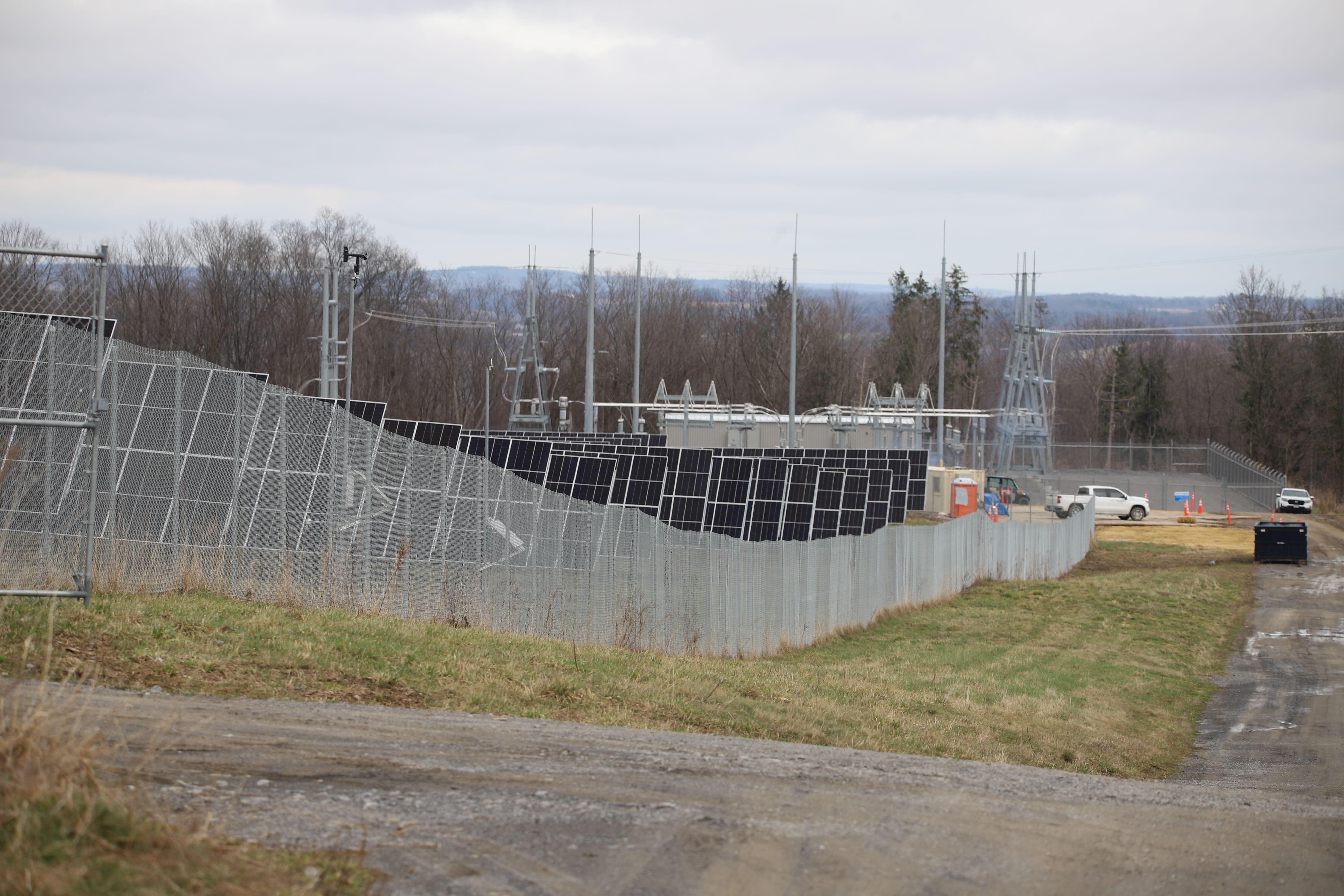
Boralex, the Canadian renewable developer that has been behind Fort Edward Solar, a 100MW commercial solar complex sited for designated and protected grassland habitat in Upstate New York, near my farm, at the end of last month announced they were being acquired.
Brookfield Asset Management is acquiring Boralex and will be taking on all of the land leases and renewable permits that were banked by the Canadian renewable developer.
And yes, Brookfield Asset Management is the same company that the current Prime Minister of Canada, Mark Carney, has been questioned about (he was a former Vice President of Brookfield) before the House Ethics Committee. You can read more about that here.
The NYS Department of Public Service plucked Jason Zehr from his role at one of the largest renewable conglomerates in the world, and installed him as the Deputy Executive Director of ORES, where he authorized construction for Alle-Catt Wind in Western New York last week.
Alle-Catt Wind was not cleared to begin construction due to noise concerns for surrounding properties and wildlife. New York’s own Department of Health and Department of Environmental Conservation expressed concerns, requiring one of two regulatory options be chosen by the developer, Invenergy, before proceeding with construction.
Zehr rubber-stamped the authorization notice anyway.
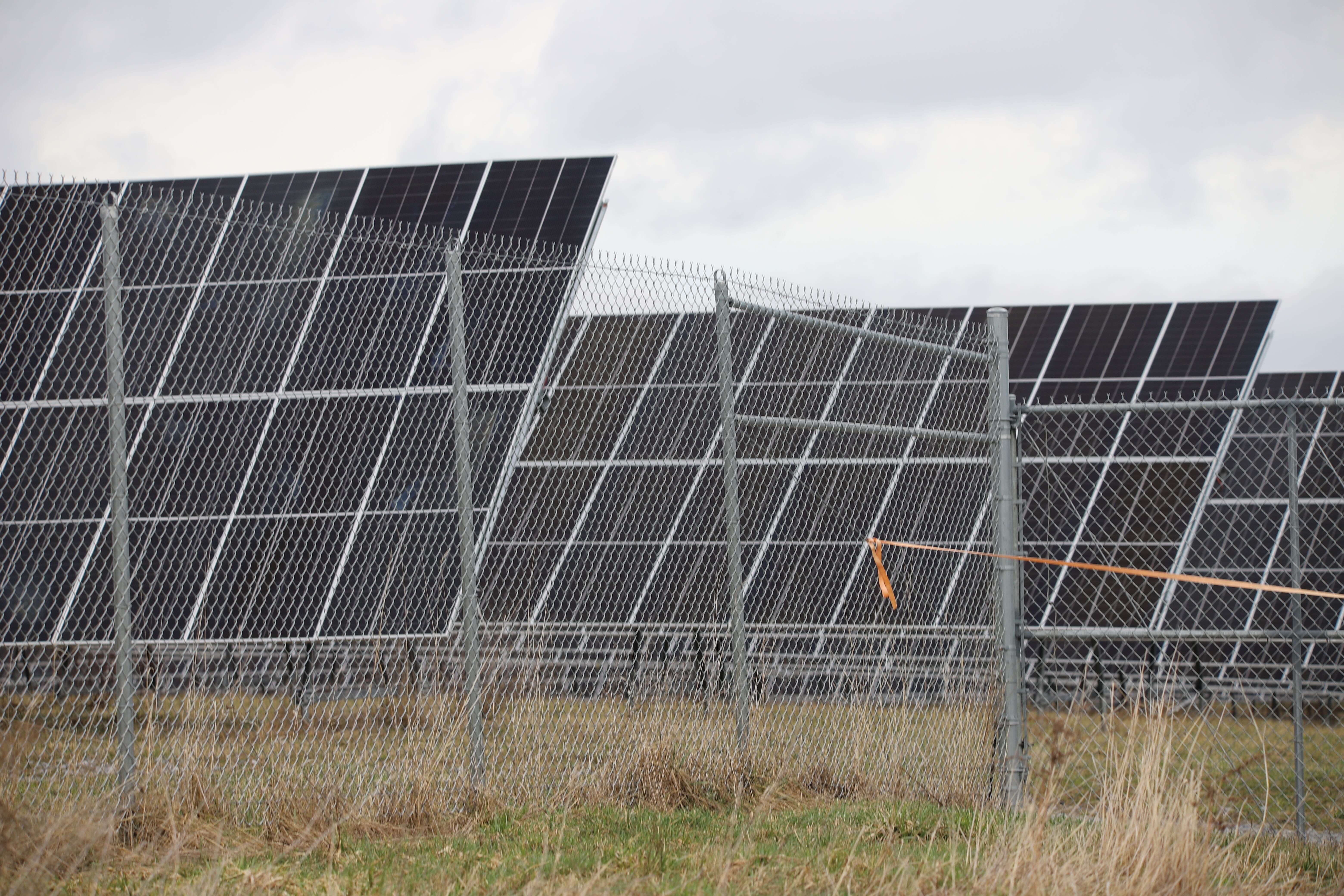
In the last two-weeks alone, ORES has approved:
a final permit for Flat Creek Solar
a final permit for Agricola Wind
a final permit for Oxbow Solar
and Alle-Cat Wind was cleared to proceed with construction against the wishes of the town, the Department of Health, and even the Department of Public Service
Even for an office that is completely captured by the industry it’s supposed to regulate, approving that many projects in such a short timeframe sets a new precedent for ORES.
Why?
Federal tax credits are being sunsetted by July 2026
Developers need to get their “shovels in the ground” by July 2026 to cash in on federal tax credits that make up nearly 30% of the revenue for these renewable projects. Without these credits, commercial solar and wind would not generate enough profitability in the open market. Wind and solar is too intermittent, unreliable, and expensive, backed up by fossil fuel-powered generators and supply chains needed to get the materials from China to the U.S.
Developers don’t need the project finished by July 2026. They legally need to “commence construction” before the July 4, 2026 cutoff.
These tax credits are not small:
Investment Tax Credit (ITC): around 30% of project cost
Production Tax Credit (PTC): long-term revenue stream
For a project like Alle-Catt (hundreds of MW), this can be hundreds of millions of dollars.
Despite noise disputes, wildlife concerns (Alle-Catt Wind will result in mass eagle deaths), and incomplete analysis, ORES and Jason Zehr gave Invenergy the go-ahead on the project so they can earn their federal tax credits before July arrives.
Unfavorable ORES press
Something else notable happened at the end of last week. One of the larger media broadcasters in Albany, New York covered the renewable energy battle and linked to my nonprofit, American Land Rescue Fund.
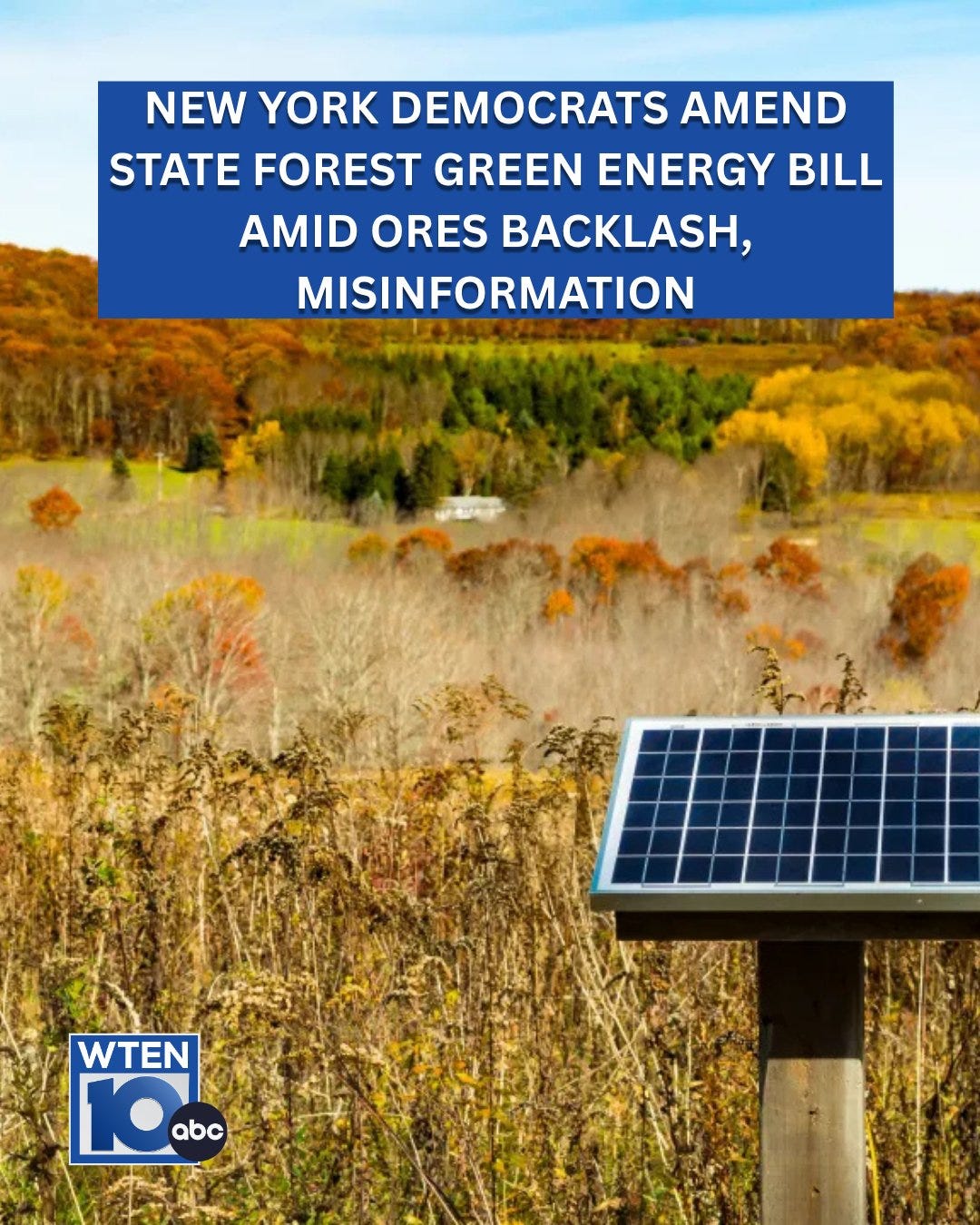
Though the article is littered with its own misinformation and unwillingness to report on the factual realities of renewable energy, it covered that, nonetheless, this is an issue that is at the forefront of every rural town and village across New York State.
The tides are turning in public awakening. New York State citizens are no longer in the dark as it relates to ORES and what it stands to do to our grasslands, farmland, and wetlands if left unchecked. The office currently does not have a single governmental check/balance placed on it, while ORES “staff” that writes most of its briefings remains anonymous and inaccessible to the public.
New York State citizens are mad, and rightfully so. They are aware of what’s happening here. ORES has gobbled up our Home Rule that’s baked into the New York Constitution, and the people of this state won’t forget it.
Enough hell has been raised that local news has no choice but to acknowledge this is happening, and it’s real. Even the Times Union covered the renewable energy debacle this past Sunday, albeit with more reporting inaccuracies that are forced onto their narrative by the office of Governor Kathy Hochul.
What do you get when federal tax credits have an expiration date and local unrest escalates to the point of thousands of angry emails and phone calls being placed to NYS legislators? You get an ORES mad-dash to final permits, called in by the developers that ORES is supposed to be impartially regulating.
It’s always darkest before the dawn
I have predicted this in the fight against ORES. It’s going to get haphazard, rushed, destructive, and painful before the light at the end of the tunnel. It’s the only way to force a change in a state that has been held hostage by one-party rule for far too long.
No political party is “good” when it exists without challenge. Balance is desperately needed in New York State. We’re going to force that balance, either through lawsuits or federal governmental intervention.
In the mean-time, continue to comment, share, and discuss commercial renewable energy sprawl. There is power in understanding.
Much more reporting to come, both on ORES and my battle against Fort Edward Solar to preserve New York State’s grasslands and native plant habitats.